-
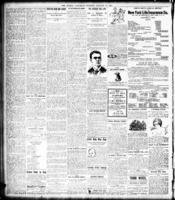
An article (with a sketch of the Vanderbilt Residence) describing the appearance of the Vanderbilt Residence. The article notes that the “first authentic description of the house would appear in The Sunday World.” The article also advocates that people who enjoy reading about nineteenth-century architecture would enjoy reading the Vanderbilt House’s description in The Sunday World. This article was added to the New York World to promote and show off new architecture.
https://chroniclingamerica.loc.gov/lccn/sn83030193/1894-01-13/ed-1/seq-2/
Page 2
-
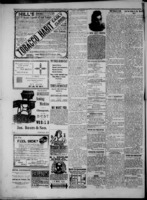
This advertisement is promoting a Democratic paper. The ad claims to have special wires, writers and artists that work the paper and are expensive, but worth it for the content that is printed. It states that it gets all the news from around the world for the reader to read.
-
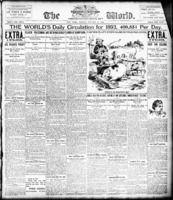
A political cartoon showing a farmer taking care of his pigs. The ‘Republican’ pig is represented as a fat and greedy pig while the ‘Democratic’ pig is represented as a starved, skinny, and angry because it is not being taken care of by the farmer. The political cartoon is pro-democratic and attempts to convey Republicans as being mean-spirited and greedy.
https://chroniclingamerica.loc.gov/lccn/sn83030193/1894-01-12/ed-1/seq-1/
Page 1
-

This page of a New South issue is mainly advertisements for different items. There is another ad for the same sewing machine as the previous one. Also, an ad for a medicine called the “Female Bitters” which was supposed to help with menstrual pain. Clearly, this page provides us with a variety of advertisements that were geared towards women.
-

An article describing how Father M. Callaghan provided homes for over 40,000 immigrant girls. Father M. Callaghan noted when being interviewed that immigrants face danger in the present (1890s) and people should not underestimate that fact. This article describes good events that are happening to immigrant children. In a newspaper that was advertised to immigrants, this is information that they would appreciate hearing about.
https://chroniclingamerica.loc.gov/lccn/sn83030193/1893-09-30/ed-3/seq-6/
Page 6
-
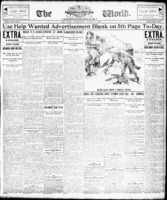
A political cartoon depicting pro-immigration ideals. The cartoon portrays Uncle Sam (the American mascot) tipping his hat to welcome newly arrived immigrants to the United States. Every immigrant portrayed in the political cartoon has a 5-cent coin for a head, representing that they are not arriving with much money and are looking for opportunity in the United States. Some of the immigrants are shown with chests and bags for items while some are not shown to have items at all. Because New York was the state where many immigrants arrived, the artist want to advocate that New Yorkers could help newly arrived immigrants gain their footing after they arrived.
https://chroniclingamerica.loc.gov/lccn/sn83030193/1893-08-09/ed-1/seq-1/
Page 1
-
This page of an issue from December 25, 1897. This page has a section that solely addresses women. The fact that this section addresses women only shows us how the audience of the paper was changing over the time period that the New South was published.
-

This article discusses how Alphonse de Lamartine lead the French Revolution of 1848 and ignited the revolutionary spirit in France. The article seems out of place to be produced in an 1893 American newspaper but it may have served as an advocator to ignite American spirits towards events that may have occurred in the United States.
-

This article describes how Arab people get to come and experience the culture of the United States as they attend Chicago’s World Fair. The author of the article describes the Arabs as though they do not understand American culture at all and references Arabic culture view them negatively. The author states that “the sun of the desert will not be lonesome in the Windy City” and that the Arabs will be “cavorting around with his sandbag couchant acquiring wealth as rapidly as he can find victims to acquire it from.”
https://chroniclingamerica.loc.gov/lccn/sn83030193/1893-04-25/ed-3/seq-4/
Page 4
-
In the first column of printed stories about half way down he column, there is a mention of Ida B. Wells and her reports on lynching that she had published to shine a bright light on the horrific events so they could no longer be ignored. However, the New South editor and publisher used her reports to pin blame on the northern states and claim that they try to report events in the south as much worse than they actually were (even though they were really as bad as reported).
-
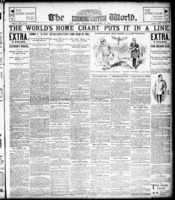
A political cartoon portraying Mike McDonald (a wealthy gang leader who supported Benjamin Harrison’s campaign (Republican)) and Wayne MacVeagh (Grover Cleveland’s Attorney General (Democratic)) to represent the 1892 Presidential Election. In the cartoon, Wayne Macveagh is presented as a classy and formal gentleman while Mike McDonald is presented as a scoundrel who is informal, smokes, and carries a pistol. Because Mike McDonald was a prominent gang leader in Chicago, he is portrayed as bad. Behind Wayne Macveagh is a sign that reads “To Democracy” while Mike McDonald has a sign that reads “To The G.O.P”. The political cartoon takes a democratic stand as the artist presents Wayne Macveagh in a positive and rational manner while Mike McDonald is not. This political cartoon also represents how the New York World took a pro-democracy stand through its sources.
https://chroniclingamerica.loc.gov/lccn/sn83030193/1892-10-26/ed-1/seq-1/
Page 1
-
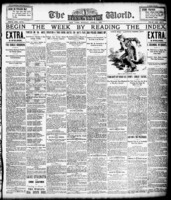
This political cartoon portrays Uncle Sam (the American mascot) stepping on a Chinese worm. The political cartoon shows the United States’ dominance over China and how it mistreats China (both through foreign policy and through the Chinese Exclusion Act). Through the message of the political cartoon, the United States is a power that mistreats the Chinese who are inferior to them.
-
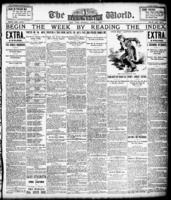
This is another image of the front page of an issue from October 21, 1893. If you browse through this cover page, you can see a glimpse of the wide variety of stories that were published in each issue. For example, there are some stories about events that took place in the Senate, advertisements for schools and medicines, and stories that were reported in other newspapers around the world.
-
An article about the 1888 extension to the Chinese Exclusion Act and how the extension is unfair to the Chinese. The author takes a pro-immigration stance by noting that the U.S. has violated the contract it made with China and that Chinese immigrants who live in or move to the United States are treated heinously. The author states that the Chinese have “protected American missionaries and helped the American merchant”. This article demonstrates what a journalist thought of the Chinese Exclusion Act and shows how the New York World used its text to speak for immigrants.
https://chroniclingamerica.loc.gov/lccn/sn83030193/1892-04-04/ed-1/seq-1/
Page 1
-
An article about the fires and damage done to tenements. The author notes that the burned tenement was operated by black landlords and that three attempts had been made to burn the tenement. Those who burned the tenements not only caused fires in many rooms and roof of the building, but left pools of kerosene in the hallways of the tenements. The article hints that racism was the cause of the burning of the tenement and creates discussion among New York citizens about a local issue.
https://chroniclingamerica.loc.gov/lccn/sn83030193/1892-04-02/ed-3/seq-2/
Page 2
-
A horror-based story about Mexican superstition. The strange tale describes a conductor who sees a white horse run across the train tracks between San Francisco and San Jose and eventually leads to the mayor (a rich American) being robbed and killed by a man named Vasquez. The purpose of this article was to create a suspenseful story for avid readers and to create fear towards Mexicans.
https://chroniclingamerica.loc.gov/lccn/sn83030193/1891-07-24/ed-1/seq-3/
Page 3
-
An article describing how Coroner Levy plans to send Russian immigrants back to Russia. The author advocates that many of the immigrants being detained should stay in America because they can become successful and many of them would be persecuted by Tsar Alexander III. This article demonstrates how the New York World takes and advocates for a pro-immigration stance.
https://chroniclingamerica.loc.gov/lccn/sn83030193/1891-07-20/ed-2/seq-4/
Page 4
-
An article by Charles Bertand Lewis (M. Quad) in which he describes his experience in witnessing a young newsboy get his nose clipped by a larger boy. After observing the newsboy fish in a pond, he notes that he caught up with the newsboy later to witness him tackling a small boy. The story M. Quad tells seems to invoke human confidence and persistence (never giving up) but the moral is made unclear as M. Quad does not define who the boys are. Were the boys bullies? It is clear that M. Quad gives us an insight into the lifestyles and psychology of city boys in the late nineteenth century.
https://chroniclingamerica.loc.gov/lccn/sn83030193/1891-07-20/ed-2/seq-2/
Page 2
-
An article describing how Austrian authorities confiscated and slandered portraits and the escutcheon (a physical emblem, worth lots of money) of the Italian royal family. The article portrays the Italian royal family as victims and describes the Austrians as “abusive”. Clearly, the author is siding with the Italians. The article also describes how Prince Bismarck’s campaign to serve in the Reichstag of Geestemunde (The parliamentary building of the region of Geestemunde) as sparked discussion. The “sensation” that the author describes also creates uncertainty as Prince Bismarck’s governance over Geestemunde will not be certain until he is re-elected.
https://chroniclingamerica.loc.gov/lccn/sn83030193/1891-03-11/ed-2/seq-3/
Page 3
-
An article describing how Austrian authorities confiscated and slandered portraits and the escutcheon (a physical emblem, worth lots of money) of the Italian royal family. The article portrays the Italian royal family as victims and describes the Austrians as “abusive”. Clearly, the author is siding with the Italians. The article also describes how Prince Bismarck’s campaign to serve in the Reichstag of Geestemunde (The parliamentary building of the region of Geestemunde) as sparked discussion. The “sensation” that the author describes also creates uncertainty as Prince Bismarck’s governance over Geestemunde will not be certain until he is re-elected.
https://chroniclingamerica.loc.gov/lccn/sn83030193/1891-03-11/ed-2/seq-3/
Page 3
-
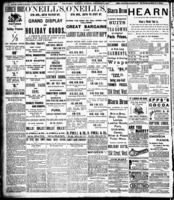
An advertisement that convinces consumers to purchase the newest model of The Smith Premier Typewriting Co., typewriter. The article advocates that when you buy the newest typewriter, you will not have sloppy writing. This advertisement also shows updated technological inventions were advertised to citizens. The illustration of the typewriter serves as a pop-out image that makes consumers more likely to notice the advertisement among other advertisements in the New York Evening World. Whether they could afford the advice, this article shows the advertising of new technologies to ingrain them in the thoughts of New York citizens.
https://chroniclingamerica.loc.gov/lccn/sn83030193/1890-12-09/ed-3/seq-4/
Page 4
-
Originally published in Chicago, Illinois on October 31, 1890, this article describes how George Watkins, an African-American “lothario” was arrested for making threats to kill inside a building. According to the article, Sally White caused Laura Johnson to jump from a third-story window to escape getting shot. Consultants to the conviction of George Watkins include Principal Leech and Arthur Schiff, but the article is unclear in noting whether Watkins committed the crime. Race could potentially play a factor into this story because Watkins is African-American and Laura Johnson is white.
https://chroniclingamerica.loc.gov/lccn/sn83030193/1890-11-01/ed-1/seq-4/
Page 4
-
An article describing concern over Republican victories in Pennsylvania because many Pennsylvanian citizens do not support the Republican party and the organization of “Independent Republicans is confined to Philadelphia and Allegheny. The article sparks uncertainty because of how citizens think the election will play out. The article takes a pro-Democratic point of view because it represents how citizens would be fearful of a Republican nominee.
https://chroniclingamerica.loc.gov/lccn/sn83030193/1890-11-01/ed-1/seq-4/
Page 4
-
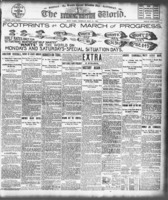
Whether this story was reported honestly, or people knew the family, the story shows how the New York World used traumatic events to capture people’s attention. This is an article describing the abuse and attack of Mrs. Mary Ward by her brother Daniel O’Connell and her mother, Mrs. Richards.
https://chroniclingamerica.loc.gov/lccn/sn83030193/1890-05-12/ed-1/seq-1/
Page 1
-
An article that discusses the fate of Ellis Island after a resolution was passed explaining the usage of the island. The author takes a pro-immigrant stand and notes that Ellis Island should be used as an immigrant depot.
https://chroniclingamerica.loc.gov/lccn/sn83030193/1890-03-27/ed-1/seq-4/
Page 4