-
 An IMPENDING CRISIS: The Difficult Position of a Statesman Who Wants to Please the Rural and Placate the City Voter
 A political cartoon depicting U.S Senator Orville H. Platt riding towards the White House with politicians (Warner M. and Lauterbach) trying to get him to choose between Liberal Sunday Law (liberal law) and Strict Sunday Law (conservative law). The political cartoon represents the uncertainty that Democrats feel about Platt because the illustrator believes Platt is going through in order to please voters. Because Platt was a prominent Republican figure in the 1890s, this political cartoon represents how he would ignore his political duties to listen to the opinions of others (rich businessmen).
https://chroniclingamerica.loc.gov/lccn/sn83030193/1895-09-28/ed-1/seq-1/
Page 1
-
 A LITTLE OF THIS BAGHDAD STYLE, Roosevelt Has Been Doing the Arabian Nights Act - Here’s a Chance for Strong
 A political cartoon portraying William Lafayette Strong preparing to attack an ex-boss. The political cartoon portrays Strong as a brute who will mercilessly chop off the head of the ex-boss while the ex-boss is cowering on his knees in fear. The illustration takes an orientalist (particularly, Arabian) theme as Strong and the ex-boss are represented in Arab clothing, the architecture of the building they are in takes from Arabic designs, and the sword that Strong holds resembles that in which characters from the Arabian Nights story would carry. While the political cartoon can be described as representing Arabic culture in a degrading manner, the political symbolism within the illustration represents Strong as greedy (the reason why could be due to his association with the Republican party).
https://chroniclingamerica.loc.gov/lccn/sn83030193/1895-05-03/ed-1/seq-3/
Page 3
-
 R.H. MACY & CO., Spring Clothing For Men and Boys
 An advertisement for men’s coats, vests, and suits. In the advertisement, an illustration of a man wearing a suit and tophat is presented. The illustration of the man represents how masculinity (appearing fashionable) was portrayed in American society as the man was sketched to appear formal and dignified to persuade consumers to purchase clothing from Macy’s.
-
 NO CIGARETTES FOR BOYS, Public School Children Bought Them of a Woman
 An article describing how E.H Hubbell (the Commissioner of Education for the state of New York) accused Susan Balter of selling cigarettes to Charles McGovern and John Keheler (both were twelve-year-old boys). This article demonstrates how citizens focused on moralizing youth (by preventing them from smoking cigarettes) and how the New York Board of Education dealt with affairs.
-
 The Streets of New York
A political cartoon representing the filth of New York through exaggerated illustration. In the political cartoon, a man walks the streets of New York where the streets are filled with fog and death (represented by the Grim Reaper and the fog surrounding him). The man could be viewed as someone who is not a New Yorker and is touring the city. The political cartoon symbolizes the illustrator’s opinion that the streets of New York were dirty and needed to be cleaned.
-
 A Single-Taxer Sings
 A letter (in the form of a poem) by S.T.A. to The Trinity Corporation advocating to remove the “single tax”. S.T.A. notes that the “single tax” promotes “injustice” and “discourages landlordism,”. His letter demonstrates how citizens used newspapers such as the New York World to speak their opinions about economic concerns.
https://chroniclingamerica.loc.gov/lccn/sn83030193/1895-01-01/ed-1/seq-4/
Page 4
-
 JAPAN WAS PUFFED UP, Her Easy Conquests Developed Thirst for Territorial Acquisition. WILL NOT LISTEN TO ADVICE. Until the New Treaty is Ratified, America Not Likely to Be Snubbed. CHINA WILL BE PUNISHED. No Peace Until the Emperor Bows to the Authority of the Great Mikado
 An article written by James Creelman that describes the United States’ role in its policies with Japan and how it is dealing with the Sino-Japanese War. He notes that President Grover Cleveland’s peace treaty would not be accepted by the Japanese government, what would happen to China and Port Arthur after the war ended (presuming Japan won), and the loans Japan would have to pay off war debt. Creelman takes an American perspective on the Sino-Japanese War and briefly discusses the perspectives of the Japanese, British, and Russians as well. Notably, he does not describe the Chinese perspective on the war.
https://chroniclingamerica.loc.gov/lccn/sn83030193/1894-12-22/ed-1/seq-3/
Page 3
-
 ENGLAND’S UNEASINESS. Does She Fear the Strength of Other Powers in the East. HER MINISTER SNUBBED. “The World’s” Correspondent Finds Reasons Why She May Interfere. JAPAN LONG SUSPICIOUS. Golden Opportunities That Lie in the Way of the United States Government
 An article describing the role of Great Britain in the First Sino-Japanese War. James Creelman notes how Japan has taken a dominant position in Asia by taking over Korea and that British involvement in the war would please Japan. Creelman then describes the role of Russia as he notes from his own perspective along with the perspectives of the British and the Japanese that the Russians would not get involved in the war. This article represents how an American journalist states his own opinions relating to a foreign event.
https://chroniclingamerica.loc.gov/lccn/sn83030193/1894-11-28/ed-3/seq-6/
Page 6
-
 LIBERTY WILL BEAM, Capt. Schley Has Not Been Ordered to Abolish The Light, Says There Was No Appropriation Last Year, Either. Will Use General Funds to Defray the Expense
 An article describing the money that is being used to light the Statue of Liberty. The author notes the role of the New York World in supplying money to the Statue of Liberty during its creation and notes that it should play a role in keeping the Statue of Liberty active.
-
 TO WELCOME FITZGERALD, Socialists of This City Hail the Coming of His “Army”
 An article describing the Socialist army (labor party) led by General M.D. Fitzgerald. The article notes how many red and foreign flags are visible across the streets of New York as well as how they overshadow the American flags. This article gives it readers an insight into how the American Socialist party is advocating itself in the United States.
https://chroniclingamerica.loc.gov/lccn/sn83030193/1894-05-01/ed-4/seq-7/
Page 7
-
 Advertisement (women's clothing)
 This advertisement is promoting women’s clothing items. The ad claims to have just received hats and bonnets, and more, as well as stating they are tailored to the personal taste of each customer. Another advertisement that would be targeting women in order to get them to purchase more items. By titling the garments as “Just Received”, this would also persuade women to want to go in and tailor clothing items to their personal style.
-
 Not Moving To-Day: Tenants Who Are Satisfied With Their Present Quarters
 A political cartoon portraying white men being lazy and smoking in the Manhattan Flats tenement while the landlord (man in background) tries to kick them out. The lazy nature, use of newspapers, and liquor bottles on the ground shows the property that the men own while their gestures indicate that they are satisfied with their lives in tenements. Whether the political cartoon represents positive views towards tenements or that wealthy white men are taking over tenement spaces is up for interpretation.
-
 About the Newspaper (front page)
 This image shows the typical layout for the front page of the New South’s front page of their issues. The title of the newspaper is in capital bolded letters at the top. On the left side of the front page, they print ads for a variety for services, stores and items that can be purchased. On the right side of the page, they start printing some of the stories that ran throughout the issue.
-
 EHRICH BROS. MEN AND BOYS CLOTHING
 An advertisement showing suits for men and boys (with illustrations of boys wearing the suits). Many of the advertisements within The New York World were geared towards boys and men to promote their look and a strong masculine culture.
https://chroniclingamerica.loc.gov/lccn/sn83030193/1894-03-30/ed-1/seq-6/
Page 6
-
 Advertisement (sewing machine)
 Here there is an advertisement for a sewing machine that was printed in this issue. Only women would be targeted for this advertisement because men did not do any sewing during this time period. This ad claims to have the best and cheapest sewing machine in the world. By advertising it as the cheapest and best, this would prompt women to want to buy it to test it out and try it that way they would be able to own the best machine in the world.
-
 MR. VANDERBILT’S PLACE, ‘The First Authentic Pictures and Description in The Sunday World’
 An article (with a sketch of the Vanderbilt Residence) describing the appearance of the Vanderbilt Residence. The article notes that the “first authentic description of the house would appear in The Sunday World.” The article also advocates that people who enjoy reading about nineteenth-century architecture would enjoy reading the Vanderbilt House’s description in The Sunday World. This article was added to the New York World to promote and show off new architecture.
https://chroniclingamerica.loc.gov/lccn/sn83030193/1894-01-13/ed-1/seq-2/
Page 2
-
 Advertisement (Democratic ad)
 This advertisement is promoting a Democratic paper. The ad claims to have special wires, writers and artists that work the paper and are expensive, but worth it for the content that is printed. It states that it gets all the news from around the world for the reader to read.
-
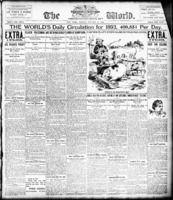 Farmer Platt’s New Game of Pigs in Clover, Which is the Republican pig?
 A political cartoon showing a farmer taking care of his pigs. The ‘Republican’ pig is represented as a fat and greedy pig while the ‘Democratic’ pig is represented as a starved, skinny, and angry because it is not being taken care of by the farmer. The political cartoon is pro-democratic and attempts to convey Republicans as being mean-spirited and greedy.
https://chroniclingamerica.loc.gov/lccn/sn83030193/1894-01-12/ed-1/seq-1/
Page 1
-
 Audience (women's ad)
 This page of a New South issue is mainly advertisements for different items. There is another ad for the same sewing machine as the previous one. Also, an ad for a medicine called the “Female Bitters” which was supposed to help with menstrual pain. Clearly, this page provides us with a variety of advertisements that were geared towards women.
-
 WORK OF TEN YEARS, 40,000 Immigrant Girls Cared for at This Mission
 An article describing how Father M. Callaghan provided homes for over 40,000 immigrant girls. Father M. Callaghan noted when being interviewed that immigrants face danger in the present (1890s) and people should not underestimate that fact. This article describes good events that are happening to immigrant children. In a newspaper that was advertised to immigrants, this is information that they would appreciate hearing about.
https://chroniclingamerica.loc.gov/lccn/sn83030193/1893-09-30/ed-3/seq-6/
Page 6
-
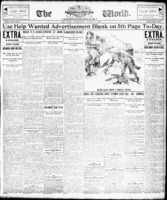 Home Again From a Foreign Shore
 A political cartoon depicting pro-immigration ideals. The cartoon portrays Uncle Sam (the American mascot) tipping his hat to welcome newly arrived immigrants to the United States. Every immigrant portrayed in the political cartoon has a 5-cent coin for a head, representing that they are not arriving with much money and are looking for opportunity in the United States. Some of the immigrants are shown with chests and bags for items while some are not shown to have items at all. Because New York was the state where many immigrants arrived, the artist want to advocate that New Yorkers could help newly arrived immigrants gain their footing after they arrived.
https://chroniclingamerica.loc.gov/lccn/sn83030193/1893-08-09/ed-1/seq-1/
Page 1
-
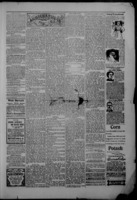 Audience (women's section)
 This page of an issue from December 25, 1897. This page has a section that solely addresses women. The fact that this section addresses women only shows us how the audience of the paper was changing over the time period that the New South was published.
-
 A STORY OF THE DAY: Lemartine’s Eloquence Sways a Mob of Parisian Revolutionists
 This article discusses how Alphonse de Lamartine lead the French Revolution of 1848 and ignited the revolutionary spirit in France. The article seems out of place to be produced in an 1893 American newspaper but it may have served as an advocator to ignite American spirits towards events that may have occurred in the United States.
-
 CHICAGO’S NEW AND OLD ARABS
 This article describes how Arab people get to come and experience the culture of the United States as they attend Chicago’s World Fair. The author of the article describes the Arabs as though they do not understand American culture at all and references Arabic culture view them negatively. The author states that “the sun of the desert will not be lonesome in the Windy City” and that the Arabs will be “cavorting around with his sandbag couchant acquiring wealth as rapidly as he can find victims to acquire it from.”
https://chroniclingamerica.loc.gov/lccn/sn83030193/1893-04-25/ed-3/seq-4/
Page 4
-
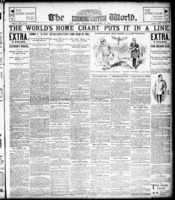 CAMPAIGN SAYINGS ILLUSTRATED
 A political cartoon portraying Mike McDonald (a wealthy gang leader who supported Benjamin Harrison’s campaign (Republican)) and Wayne MacVeagh (Grover Cleveland’s Attorney General (Democratic)) to represent the 1892 Presidential Election. In the cartoon, Wayne Macveagh is presented as a classy and formal gentleman while Mike McDonald is presented as a scoundrel who is informal, smokes, and carries a pistol. Because Mike McDonald was a prominent gang leader in Chicago, he is portrayed as bad. Behind Wayne Macveagh is a sign that reads “To Democracy” while Mike McDonald has a sign that reads “To The G.O.P”. The political cartoon takes a democratic stand as the artist presents Wayne Macveagh in a positive and rational manner while Mike McDonald is not. This political cartoon also represents how the New York World took a pro-democracy stand through its sources.
https://chroniclingamerica.loc.gov/lccn/sn83030193/1892-10-26/ed-1/seq-1/
Page 1
